

HANGARI:
Vessel of Life
Artist’s Statement
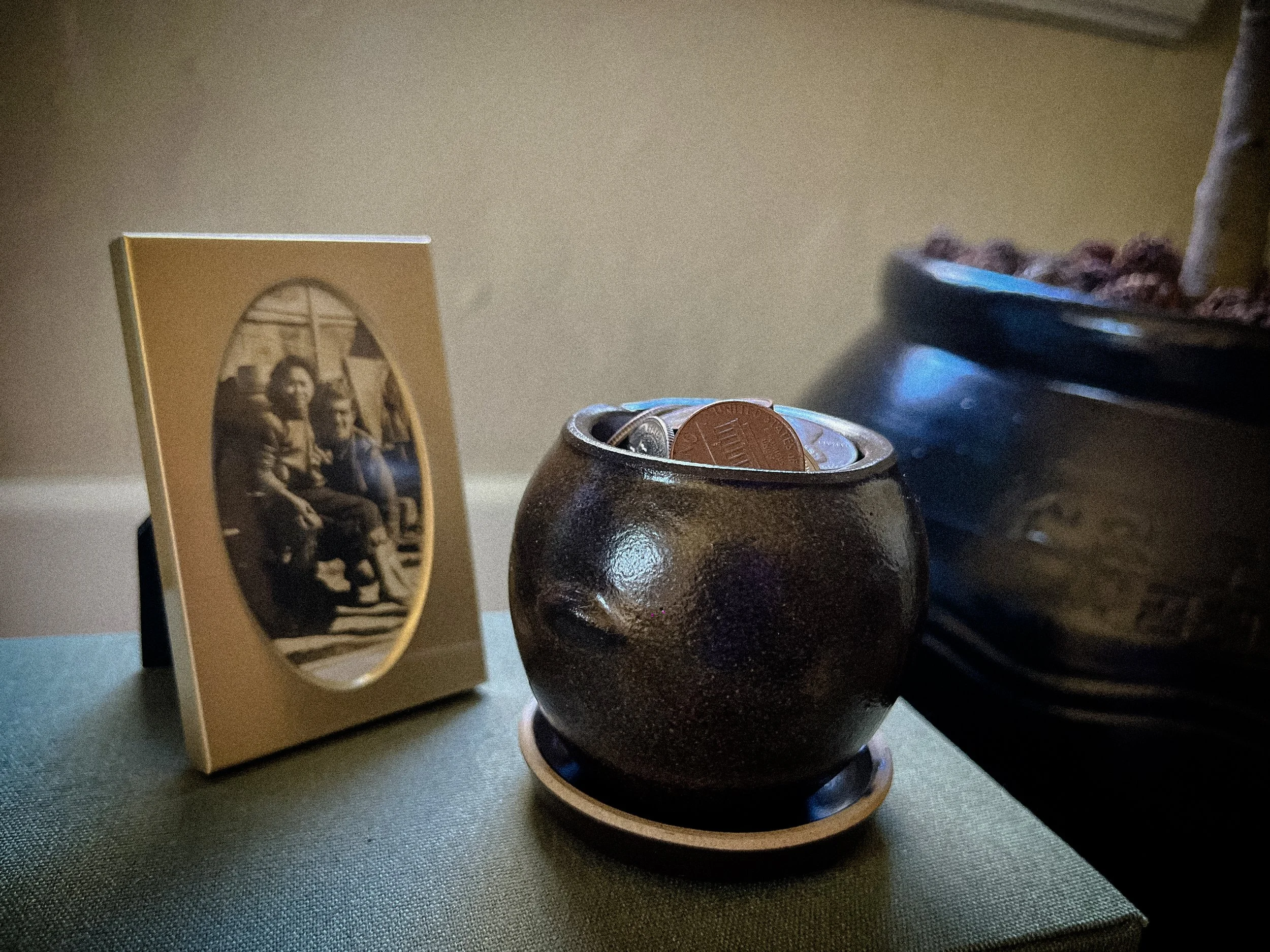
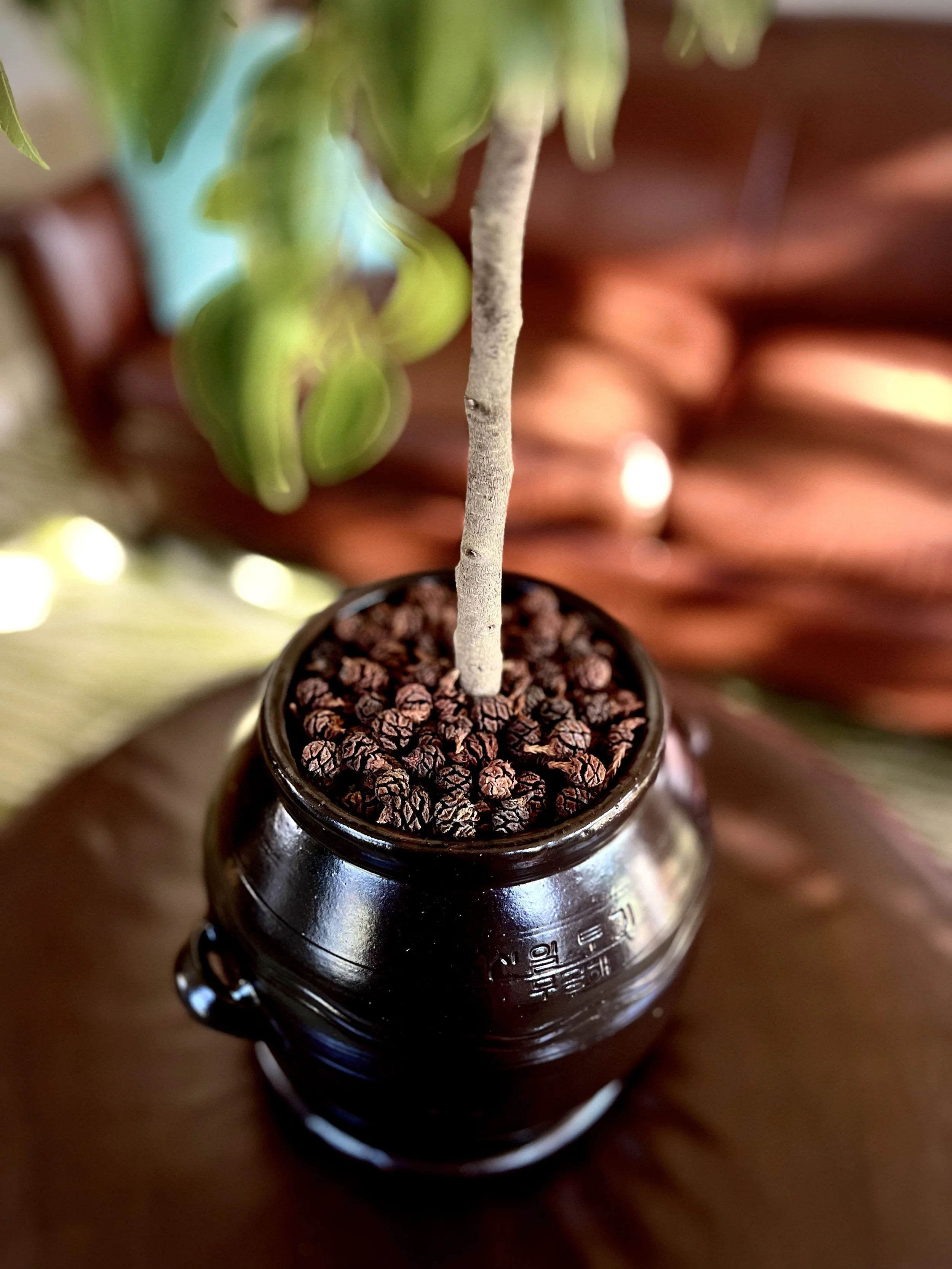
In the traditional Korean household, the hangari—a hand-built, breathable earthenware jar—was the silent anchor of survival. For my umma and the generation that endured the Korean War, these vessels were strictly utilitarian: essential protectors of kimchi and jang through brutal winters. They were the difference between hunger and nourishment.
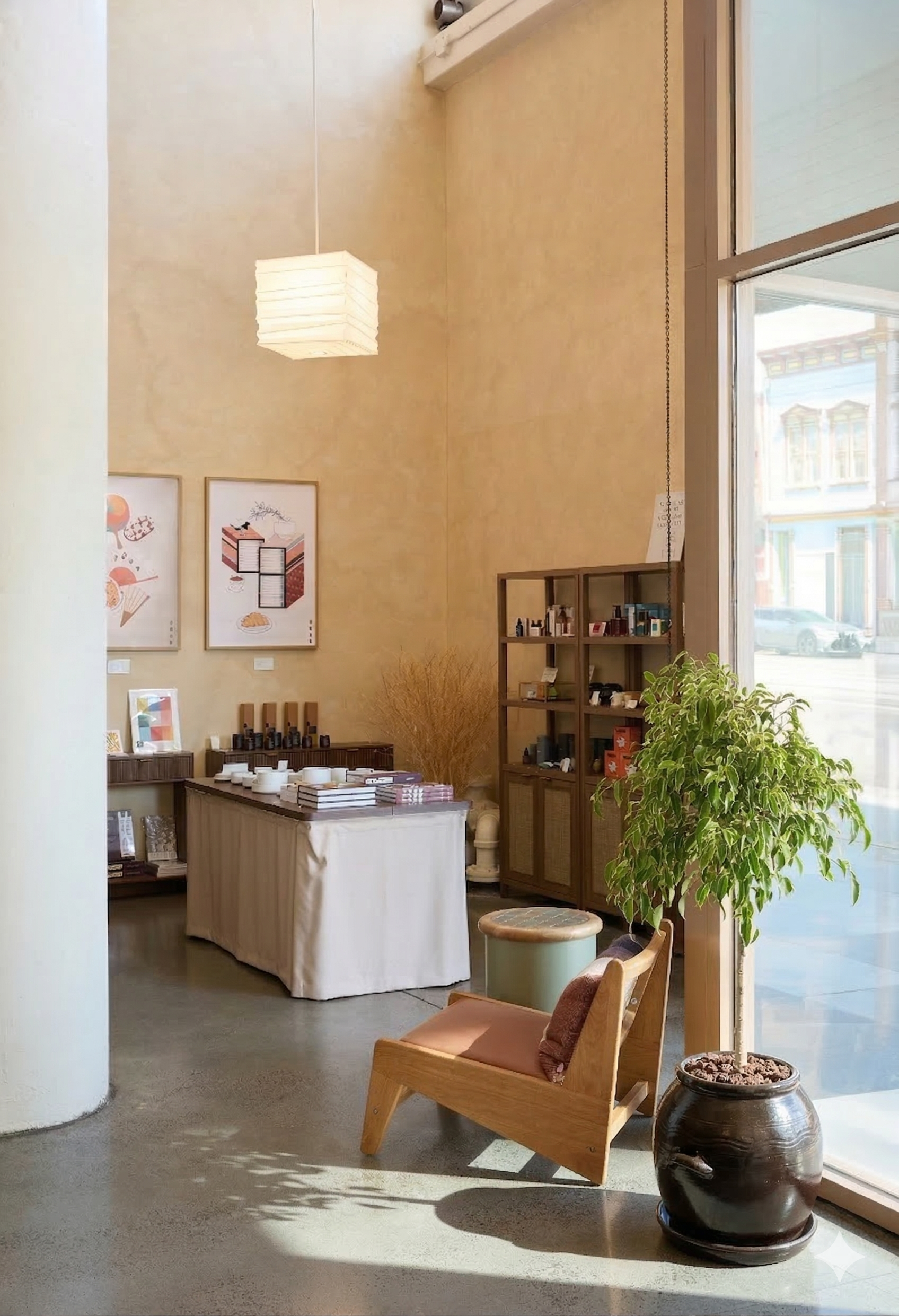
In this capsule collection, currently on display at Sohn, I reimagine the hangari not as a relic of scarcity, but as a “living womb” to enhance modern spaces. The bulbous, sturdy pottery that once fed the body now nourishes the spirit, showcasing live plants that embody the resilience, strength, and longevity of the Korean people. By transitioning the vessel from food preservation to the cultivation of living art, I am bridging the gap between my mother’s world of survival and my own world of aesthetic abundance.
This exhibit serves as an act of intergenerational translation, honoring those whose survival secured the space for the next generation to seek beauty. Here, the hangari transcends its origins; it is no longer merely a functional vessel, but a living symbol of a culture that continues to thrive and evolve.

The Collection
BRIDGING PAST AND PRESENT
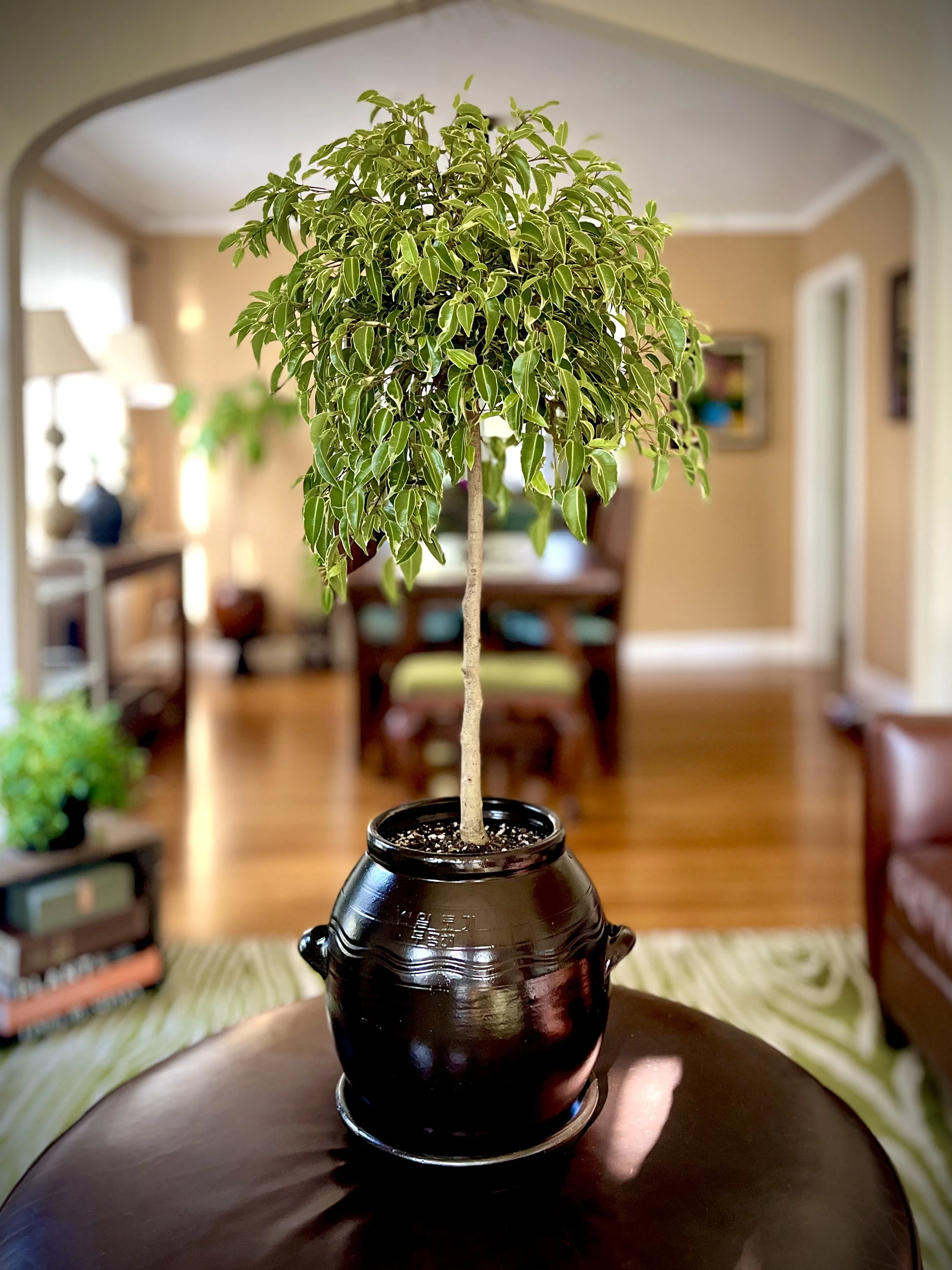
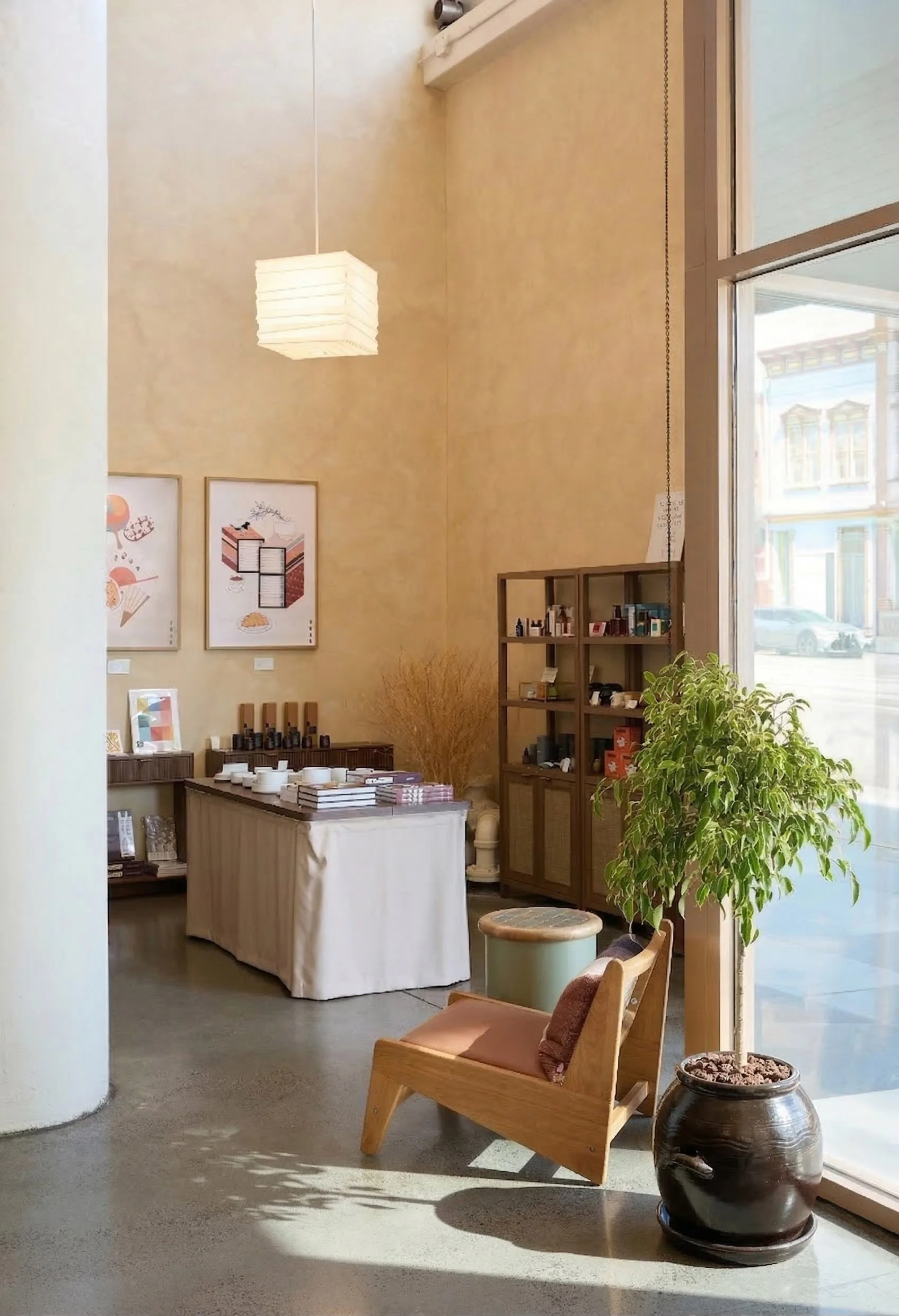
Ficus benjamina ‘Variegata’
(Variegated Weeping Fig)
This plant’s arching, fluid branches present an elegant form that softens the rustic, earth-toned strength of the hangari. Effortlessly bridging traditional utility and contemporary design, its striking cream-and-green canopy represents a quiet, graceful fortitude.
ROOTED IN RESILIENCE
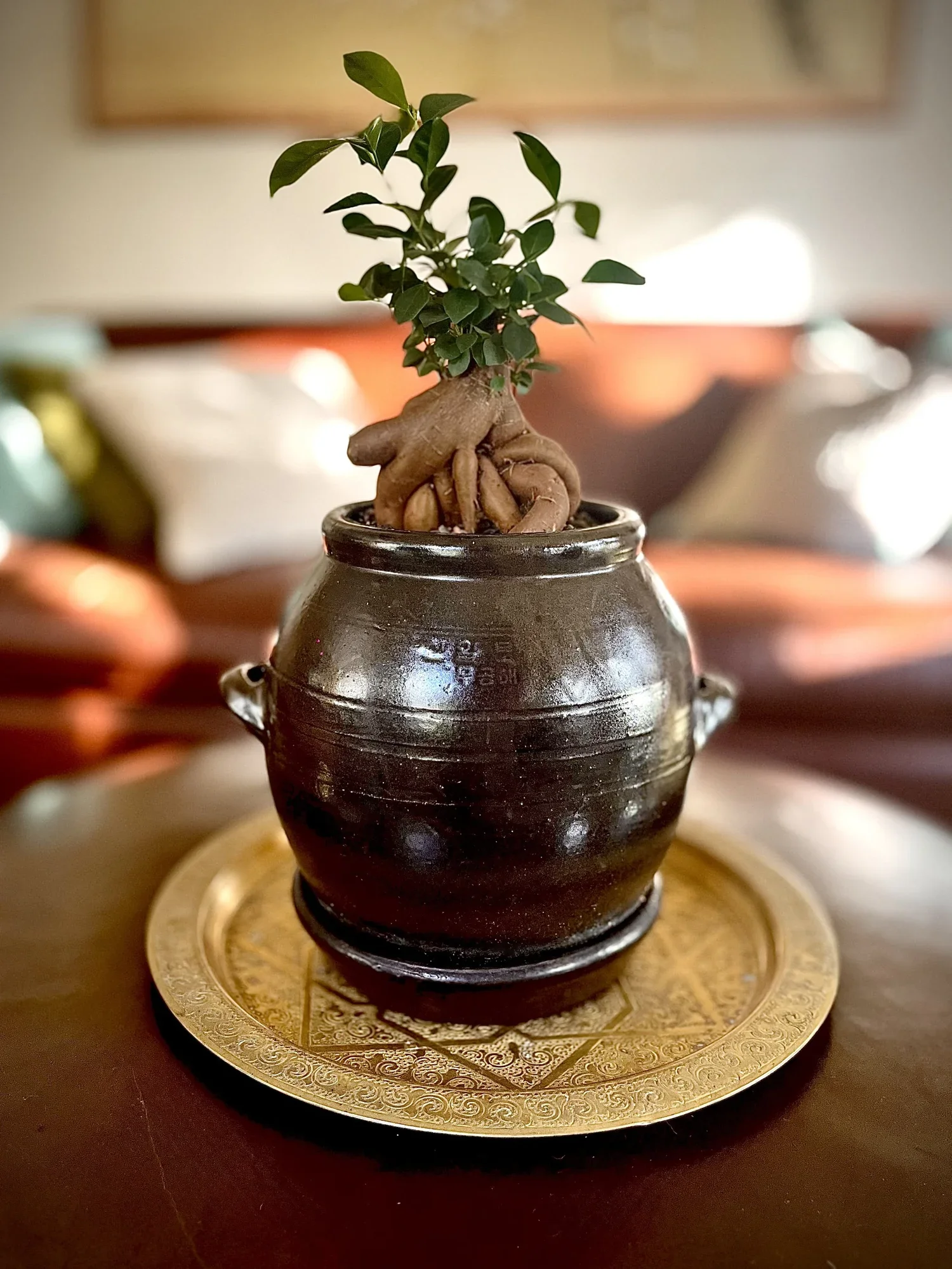
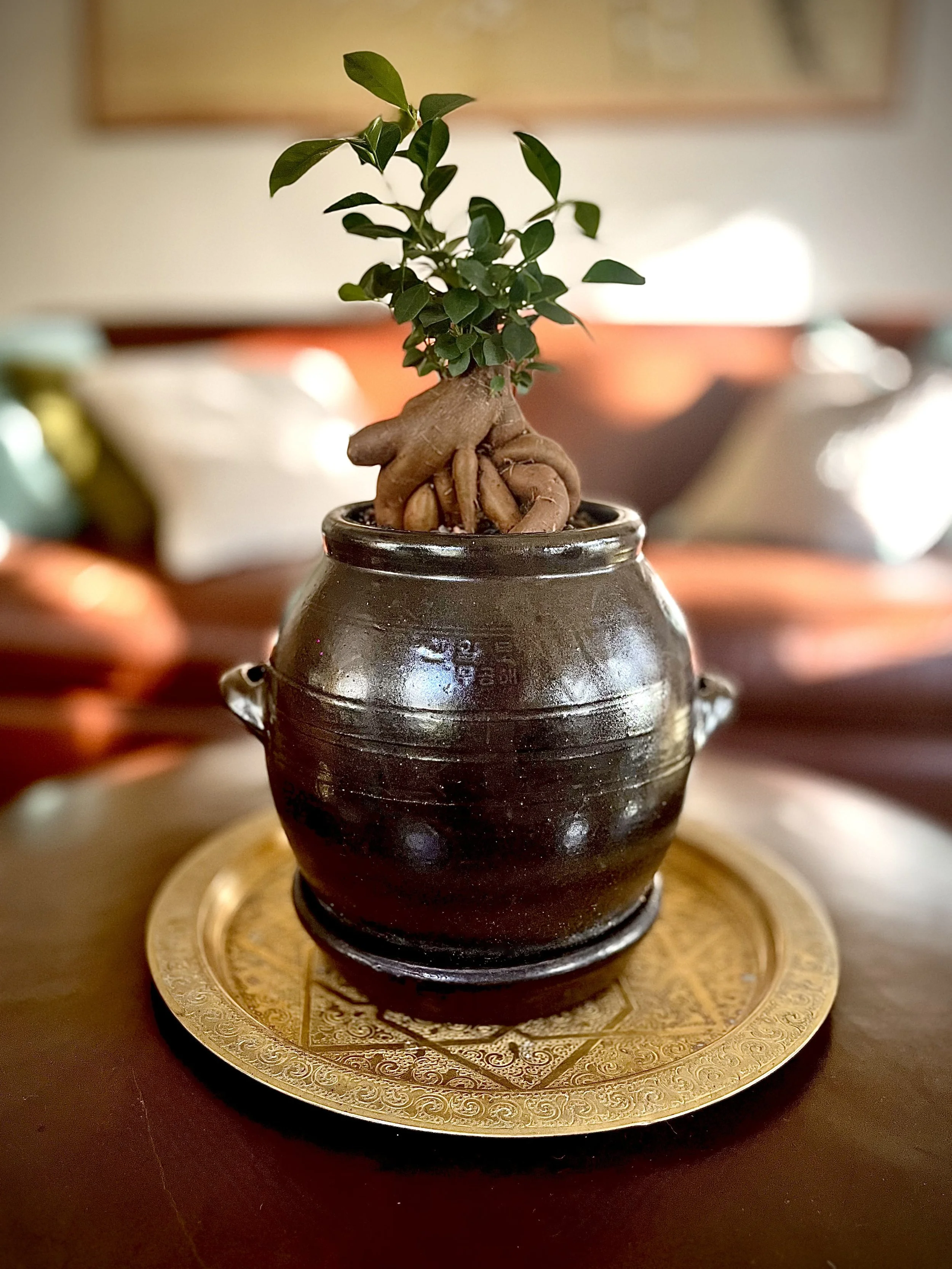
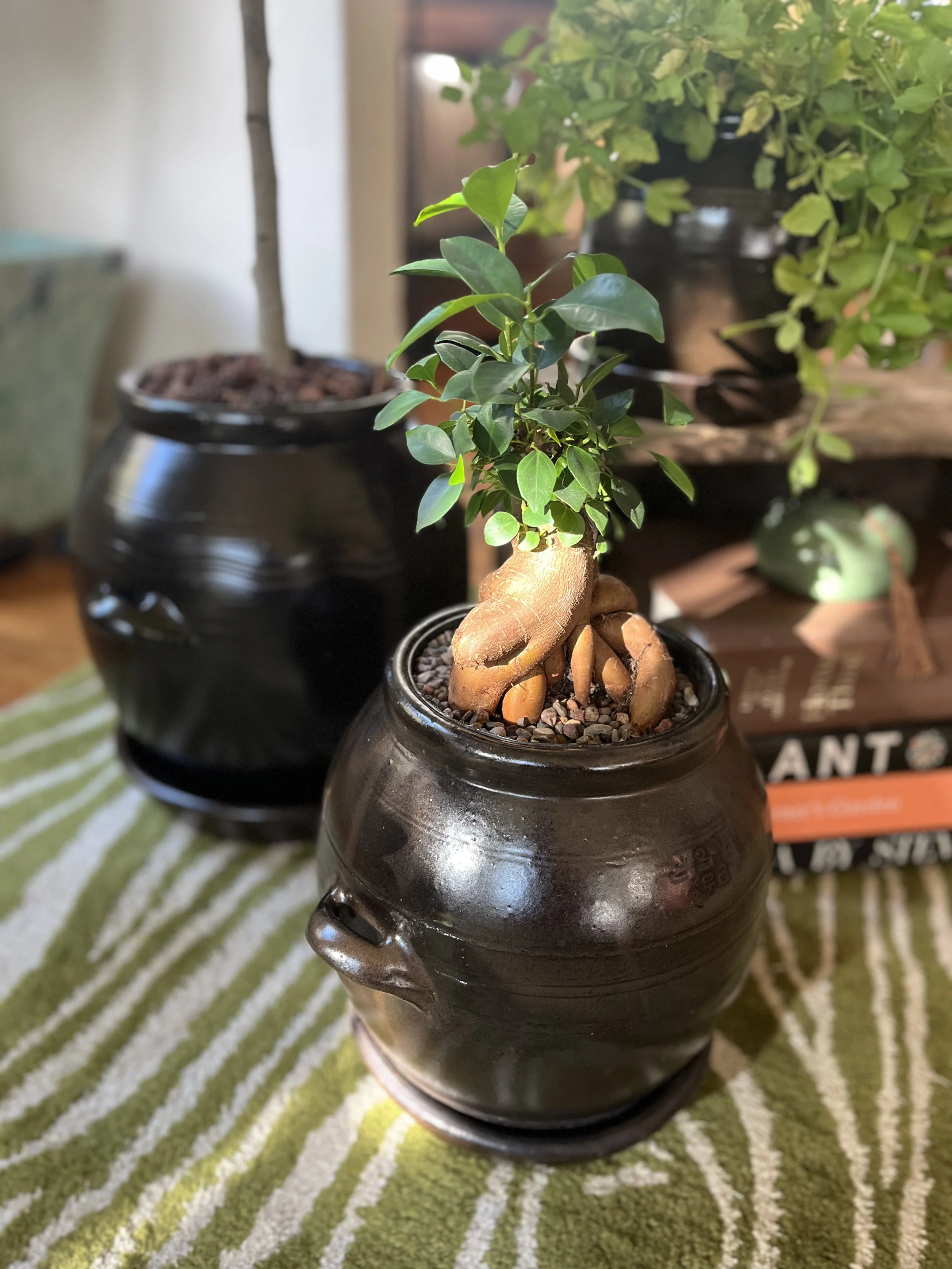
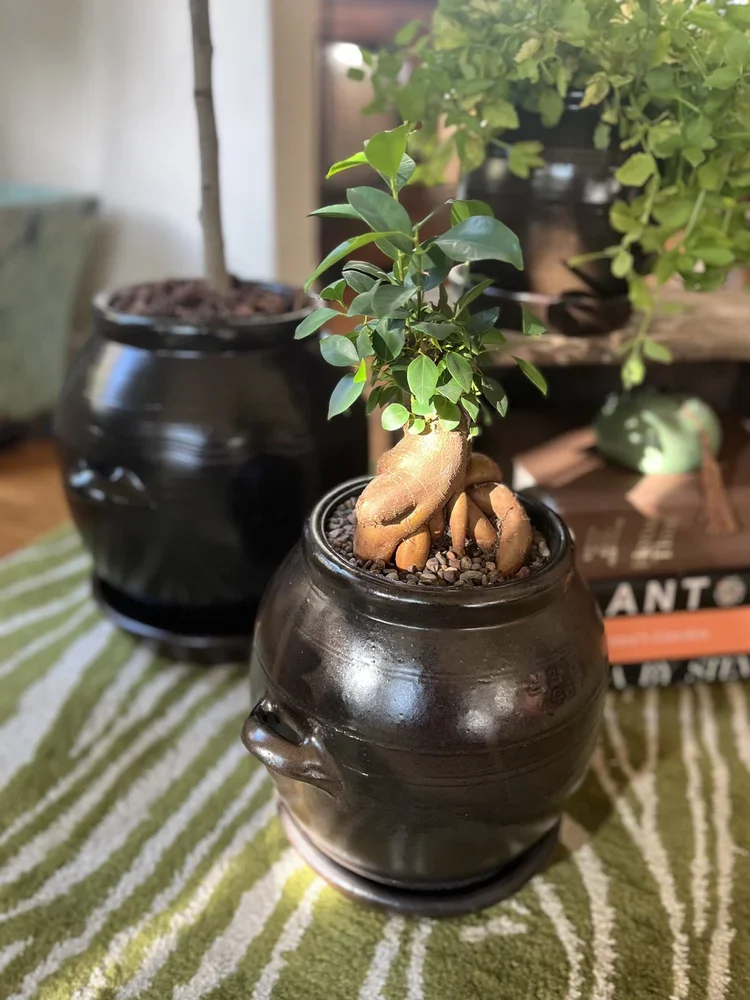
Ficus microcarpa ‘Ginseng’
(Ginseng Ficus)
A sculptural nod to Korea’s most famous medicinal tonic, the gnarled, bulbous roots of this Ficus mimic the "man-root" shape of ginseng. While the ginseng root provides vitality to the body, these exposed roots act as a storage system for nutrients, ensuring the plant’s survival during times of drought. It stands as a symbol of health, stability, and the strength found beneath the surface.
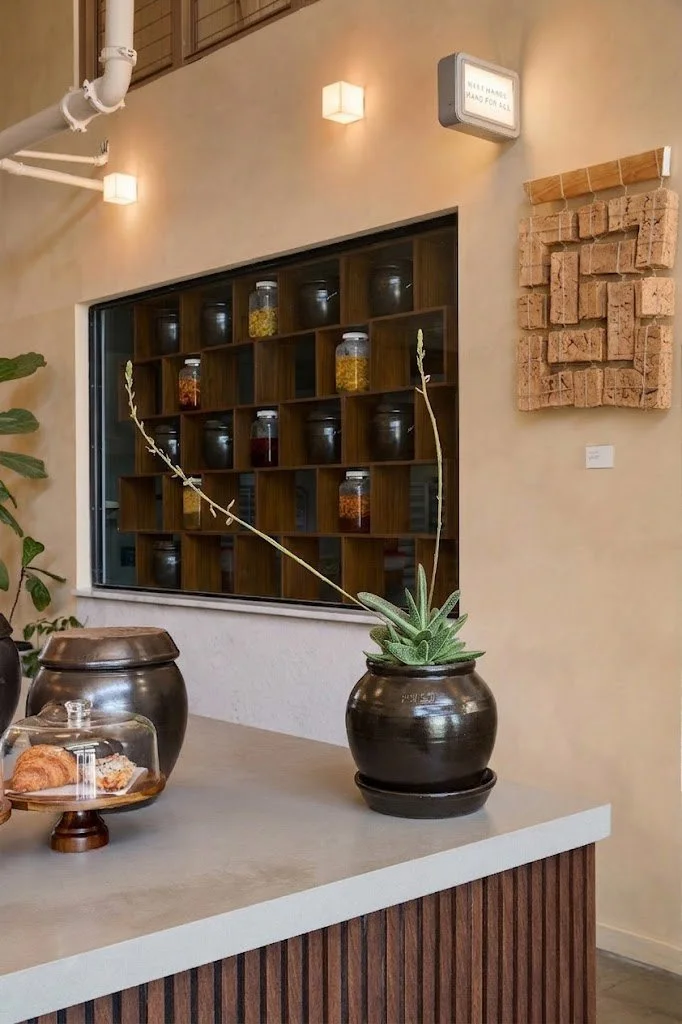
STURDY GRACE
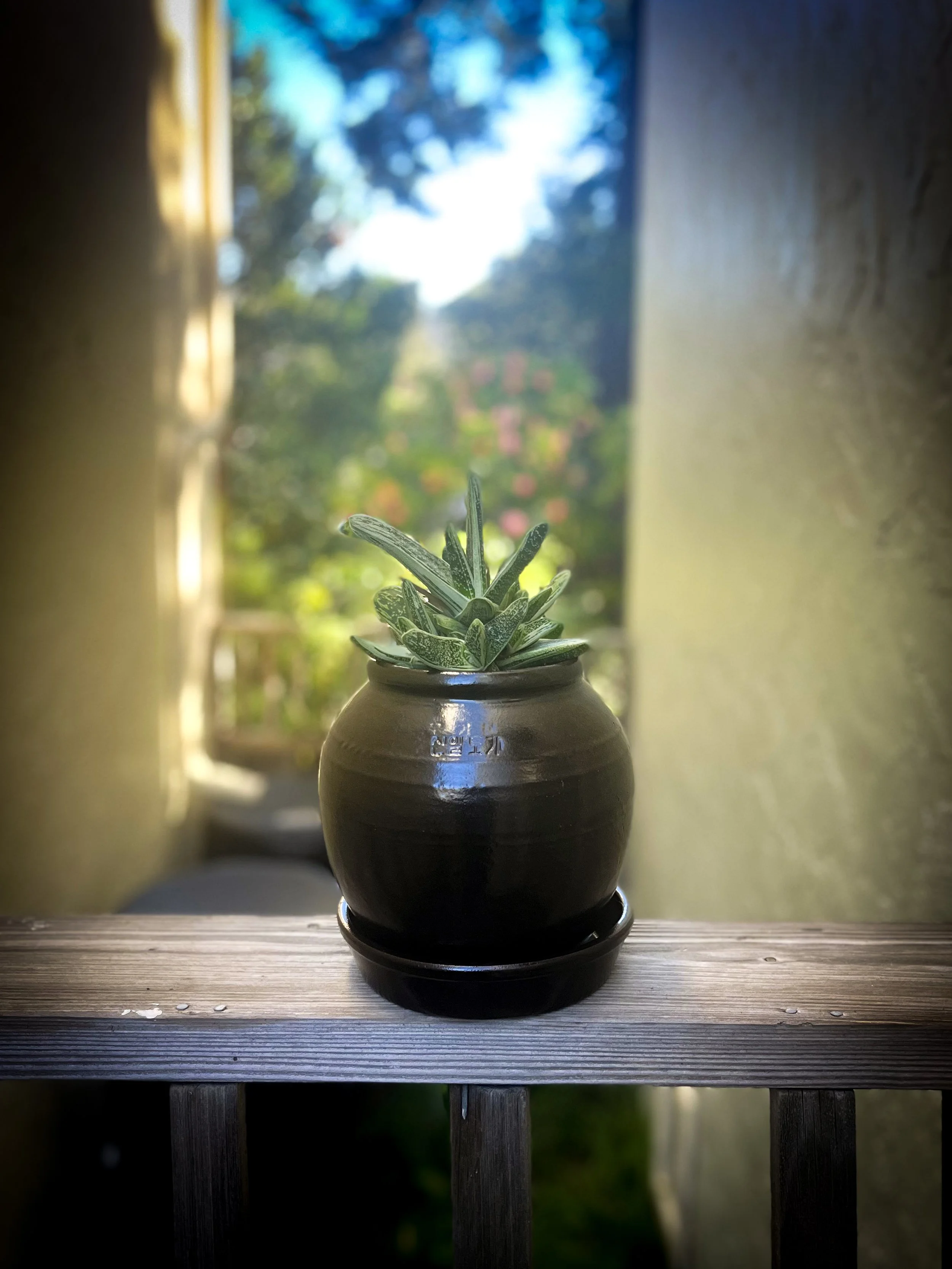
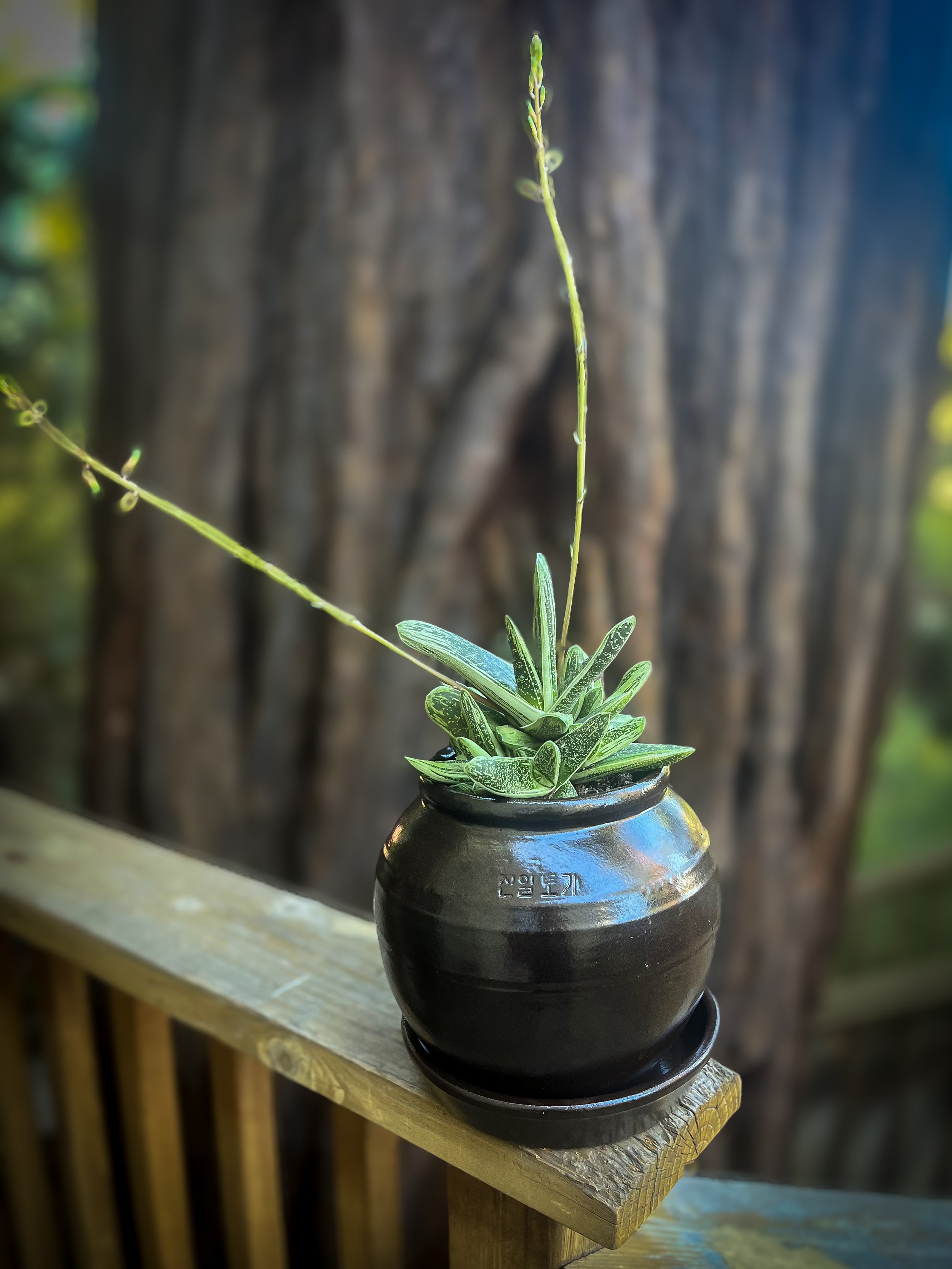
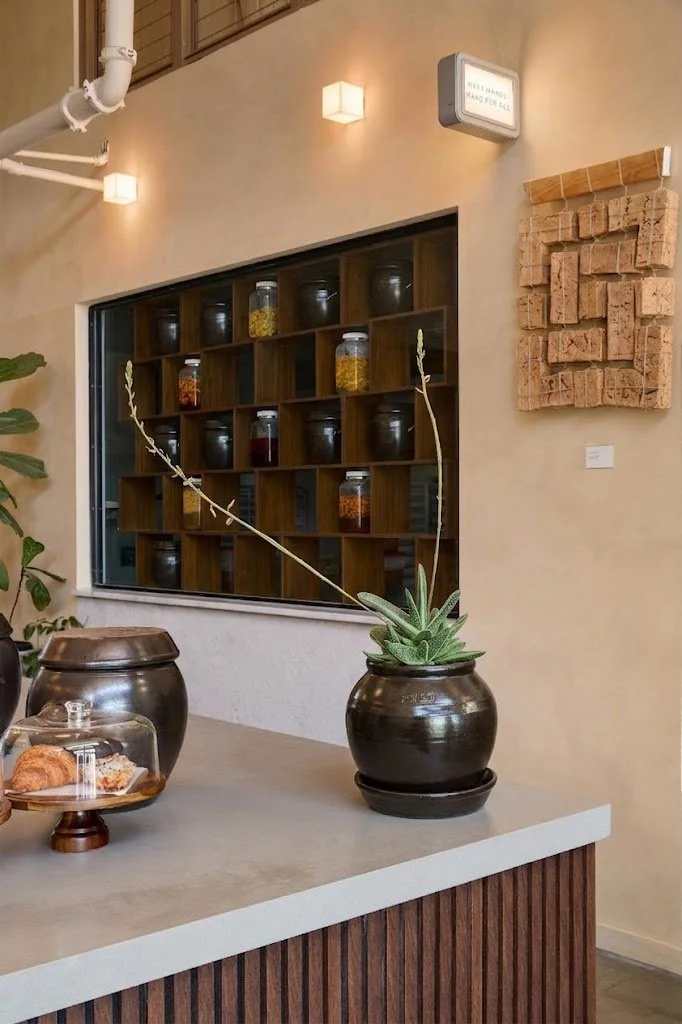
Gasteria ‘Little Warty’
(Ox Tongue)
This remarkably tough, drought-resistant succulent endures adversity, maintaining its striking form through low light and challenging conditions alike. Tubular, coral-pink flowers bloom on long, arching stalks that rise above the textural, sculptural foliage in late winter to mid-spring—a reminder that from a foundation of strength and steady care, grace inevitably blooms.